
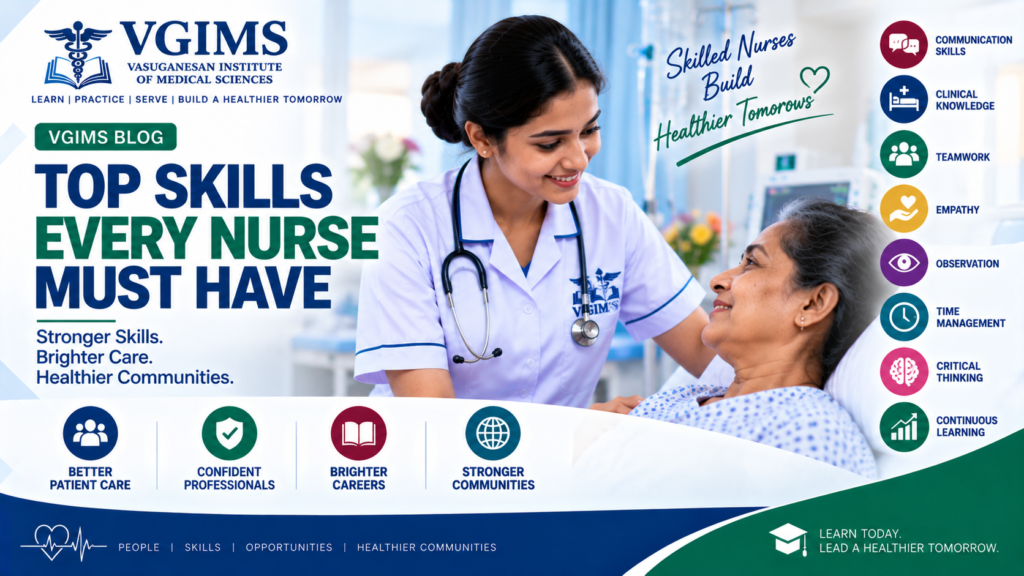
Top Skills Every Nurse Must Have
Nursing is a healthcare field that combines clinical knowledge, practical skills, communication and compassionate patient care. Nurses work closely with patients, families and other healthcare professionals making a range of skills important for everyday practice.
For students planning a career in nursing developing these skills during education and practical training can help build confidence and professional readiness.
While clinical knowledge is essential successful nursing also depends on qualities such as empathy, teamwork, observation, responsibility and the ability to keep learning.
Why Skills Are Important in Nursing
Nurses can have responsibilities depending on their education, registration, role and workplace. They may support care communicate with healthcare teams maintain records provide health education and assist with different aspects of healthcare delivery.
Because nursing involves working with people nurses need both professional and interpersonal skills.
Some of the important nursing skills include:
- Communication
- Clinical knowledge
- Patient-care skills
- Observation
- Empathy
- Teamwork
- Time management
- Professionalism
- Critical thinking
- Continuous learning
Communication Skills
Communication is one of the most important skills for a nurse.
Nurses regularly communicate with patients, families, doctors and other healthcare professionals. Clear communication can help ensure that relevant information is understood and shared appropriately.
Good communication includes:
- Listening
- Speaking clearly
- Explaining information respectfully
- Asking appropriate questions
- Communicating important observations
- Maintaining professional communication
Nurses should also understand that patients may have different concerns, backgrounds and communication needs.
Clinical Knowledge and Practical Skills
Nursing requires education and practical preparation. Nurses need knowledge related to care and skills that match their education, professional role and scope of practice.
Clinical learning can involve areas such as:
- Anatomy and physiology
- surgical nursing
- Community health
- Child health
- Maternal health and midwifery
- Nutrition
- Psychology
- Patient care
Practical training gives students opportunities to apply their learning in suitable healthcare environments.
Patient-Care Skills
Patient care is at the centre of nursing.
Nurses need to provide care with patience, responsibility and respect for dignity. They should understand that every patient has needs and may respond differently to illness and healthcare situations.
Important patient-care qualities include:
- Patience
- Respect
- Responsibility
- Attention to patient needs
- Maintaining dignity and privacy
- Following procedures
A professional approach can help create a supportive environment for patients.
Empathy and Compassion
Nurses often interact with patients during uncomfortable situations. Empathy helps nurses understand that patients may be experiencing fear, uncertainty or emotional difficulty.
Compassion can be shown through:
- Listening to patients
- Treating people
- Understanding concerns
- Maintaining dignity
- Providing appropriate support
- Communicating with patience
Empathy does not replace clinical knowledge. It works alongside knowledge and practical skills.
Observation Skills
Observation is another nursing skill.
Nurses spend time with patients and may notice changes that need to be communicated to the healthcare team. Observation and appropriate communication can therefore support the overall care process.
Developing observation skills involves paying attention to:
- Changes in a patient’s condition
- Patient responses
- clinical information
- Instructions and procedures
- Details in documentation
Nurses should communicate relevant findings according to their professional responsibilities.
Teamwork
Healthcare is a team-based environment. Nurses work alongside doctors, technicians, therapists, pharmacists and other healthcare professionals.
Good teamwork requires:
- Clear communication
- Cooperation
- Mutual respect
- Responsibility
- Willingness to support colleagues
- Understanding of roles
A nurse who works effectively with others can contribute positively to coordinated patient care.
Time Management
Nurses may have responsibilities during their working hours. Managing time effectively can help them organise their duties and respond appropriately to patient-care requirements.
Good time-management habits include:
- Planning tasks
- Prioritising responsibilities
- Staying organised
- Completing documentation
- Avoiding unnecessary delays
- Communicating when support is needed
Time management is a skill that can improve with education, practice and workplace experience.
Critical Thinking and Professional Judgement
Nursing involves situations where professionals need to observe information understand their responsibilities and communicate appropriately with the healthcare team.
Critical thinking can help nurses:
- Understand patient information
- Recognise relevant changes
- Follow appropriate procedures
- Identify when assistance may be needed
- Communicate important information
- Work within their scope
Students can develop these abilities through classroom learning, practical training and supervised experience.
Professionalism
Professional behaviour is essential in nursing.
Nurses work with patients and healthcare teams. Are expected to maintain appropriate professional standards.
Professionalism includes:
- Being
- Respecting patient confidentiality
- Maintaining appropriate boundaries
- Being punctual
- Communicating
- Following healthcare procedures
- Taking responsibility for professional actions
Professional conduct helps build trust between patients and healthcare professionals.
Emotional Strength and Resilience
Healthcare environments can sometimes be demanding. Nurses may encounter patients with health conditions, needs and emotional responses.
Developing resilience can help nurses manage challenges while maintaining appropriate patient care.
Healthy professional habits include maintaining boundaries communicating concerns appropriately and seeking support when necessary.
Continuous Learning
Healthcare continues to develop so nurses need to maintain and improve their knowledge throughout their careers.
Continuous learning may involve:
- education
- Professional development
- Learning updated procedures
- Improving clinical skills
- Developing communication abilities
- Keeping knowledge current
A willingness to learn can support long-term professional development.
How Students Can Develop Nursing Skills
Nursing skills are developed over time than all at once. Students can begin building these abilities during their education.
Useful approaches include:
- Pay attention during classroom learning.
- Participate in practical training.
- Practise communication skills.
- Learn to work effectively with others.
- Ask questions when unsure.
- Develop observation habits.
- Take feedback seriously.
- Maintain behaviour.
- Continue learning beyond the classroom.
Practical experience can help students connect knowledge with real healthcare situations.
Nursing Education at VGIMS
Vasuganesan Institute of Medical Sciences (VGIMS) in Chennai offers nursing education through its Diploma in General Nursing and Midwifery (DGNM) programme.
Students interested in nursing can develop knowledge and practical skills through nursing education and training.
Along with completing the education students should understand the relevant eligibility, registration and professional requirements before beginning their nursing career.
Building a Successful Nursing Career
A nursing career depends on more than completing an educational programme. Nurses continue developing their knowledge, practical abilities and professional qualities throughout their careers.
Communication, clinical skills, compassion, teamwork, observation and professionalism can all contribute to nursing practice.
For students considering nursing developing these skills early can provide a foundation for future learning and professional growth.
Frequently Asked Questions
1. What are the important skills for a nurse?
Important nursing skills include communication, clinical knowledge, patient care, observation, empathy, teamwork, time management, professionalism and continuous learning.
2. Why are communication skills important in nursing?
Nurses communicate with patients, families and healthcare professionals. Clear and respectful communication helps relevant information be understood and shared appropriately.
3. Is empathy important for nurses?
Yes. Empathy can help nurses understand patients’ concerns and provide care with patience, respect and dignity.
4. Can nursing skills be developed during education?
Yes. Students can develop nursing skills through classroom learning, practical training, communication practice, supervised experience and continuous learning.
5. Does VGIMS offer nursing education?
Yes. Vasuganesan Institute of Medical Sciences (VGIMS) in Chennai offers the Diploma in General Nursing and Midwifery (DGNM) programme.