
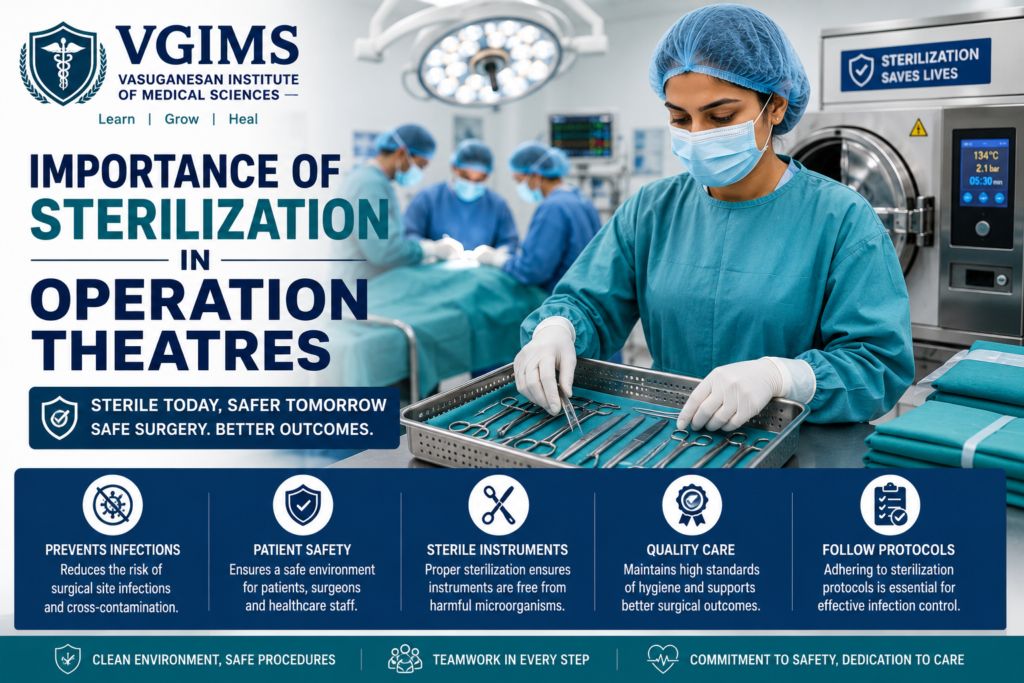
Importance of Sterilization in Operation Theatres
An operation theatre must stay very clean to help prevent germs from spreading. When people undergo surgery, they can be more vulnerable to infections. This makes the sterilization of tools and equipment a vital part of keeping healthcare safe.
Sterilization helps ensure that surgical instruments and other reusable tools are free from microorganisms before they are used.
What Is Sterilization?
Sterilization is a process used to eliminate microorganisms from an item when sterilization is required.
In hospitals, sterilization is particularly important for instruments that come into contact with parts of the body or sterile tissue during a procedure.
It is important to understand that sterilization is not the same as cleaning. Cleaning removes dirt and other visible material, while sterilization is a specific process used to eliminate microorganisms.
Why Is Sterilization Important in Operation Theatres?
1. Helps Prevent Infections
During surgery, microorganisms can enter a person’s body.
Proper sterilization of instruments is an important part of infection prevention and helps lower the risk of infections.
2. Supports Patient Safety
Patients need to know that their surgery is taking place in a properly controlled and hygienic environment.
By following sterilization and infection-control procedures, medical teams can help maintain a safer operating environment.
3. Protects Healthcare Workers
Proper cleaning and sterilization of reusable instruments can also help protect healthcare workers from exposure to harmful microorganisms.
4. Maintains Surgical Standards
An operation theatre requires strict procedures to function safely.
Sterilization is one part of a wider infection-control plan. This also includes hand hygiene, appropriate protective equipment and proper environmental cleaning.
Common Methods of Sterilization
Different sterilization methods may be used depending on the type of instrument or equipment.
Steam Sterilization
Many medical instruments that can tolerate heat and moisture can be sterilized using steam under pressure.
Dry Heat Sterilization
Dry heat uses high temperatures to sterilize certain types of instruments and equipment.
Low-Temperature Sterilization
Some medical equipment cannot tolerate high temperatures and may require specialised low-temperature sterilization methods.
The appropriate method depends on the instrument, manufacturer instructions and healthcare facility procedures.
The Sterilization Process
Sterilization involves more than simply putting an instrument into a machine.
There are several steps involved in processing instruments correctly.
Cleaning
Instruments must first be cleaned properly to remove dirt and other contamination.
Inspection
Instruments should be checked to make sure they are clean, intact and suitable for further processing.
Packaging
When required, instruments are placed in appropriate packaging before sterilization.
Sterilization
The appropriate sterilization method and cycle are used according to established procedures.
Storage
After sterilization, sterile items must be stored appropriately so they remain protected until they are needed.
Role of Healthcare Professionals
Sterilization is a team responsibility. Different healthcare workers and departments may have responsibilities related to cleaning, processing, storing instruments and infection control in the operation theatre.
Healthcare workers should:
- Follow established procedures
- Handle instruments carefully
- Wear appropriate protective equipment
- Follow proper hand hygiene
- Follow manufacturer instructions
- Report problems with sterilization equipment
- Maintain appropriate records when required
Training is important because incorrect processing can compromise the safety of medical instruments.
Sterilization and Operation Theatre Staff
Operation theatre staff must understand why infection prevention is important during surgical procedures.
Depending on their role, they may help prepare the theatre, handle instruments or maintain sterile supplies.
They must pay close attention to procedures because even a small mistake can affect patient safety.
What Happens If Sterilization Is Not Done Properly?
If sterilization is not carried out correctly, microorganisms may remain on instruments.
This can lead to:
- Increased risk of infection
- Risks to patient safety
- Contamination of clean areas
- Improper instrument processing
- Problems with healthcare procedures
This is why healthcare facilities need clear procedures, appropriate equipment and properly trained staff.
Importance for Students Entering Healthcare
If you want to work in an operation theatre or another healthcare environment, learning about infection prevention and sterilization is important.
Useful skills include:
- Understanding infection prevention
- Handling instruments safely
- Paying attention to detail
- Maintaining personal hygiene
- Working effectively as part of a team
- Following instructions
- Understanding professional responsibilities
Practical learning can help students understand how these principles are applied in healthcare environments.
Operation Theatre Careers at VGIMS
Vasuganesan Institute of Medical Sciences (VGIMS) offers programmes that help students develop knowledge and skills for healthcare careers.
Students interested in hospital-based or surgical healthcare can explore programmes based on their interests and career goals.
Before applying, students should check the latest information from VGIMS regarding available courses, eligibility, duration and admission procedures.
Conclusion
Sterilization is an important part of keeping operation theatres safe and supporting infection prevention.
Every stage matters, from cleaning and inspection to sterilization and storage. When healthcare teams follow established procedures and receive appropriate training, they can help create a safer environment for patients and staff.
For students planning to begin a healthcare career, learning about sterilization and infection-control practices can help build important professional skills.
Frequently Asked Questions
1. Why is sterilization important in an operation theatre?
Sterilization helps eliminate microorganisms from instruments and equipment that require sterilization, supporting infection prevention during surgery.
2. What is the difference between cleaning and sterilization?
Cleaning removes dirt and other contamination. Sterilization is a specific process used to eliminate microorganisms from an item requiring sterilization.
3. What are some methods of sterilization?
Depending on the instrument, methods can include steam sterilization, dry heat sterilization and low-temperature sterilization.
4. Who is responsible for sterilization in a hospital?
Different healthcare workers and departments may be involved, depending on their roles, responsibilities and training.
5. Why should healthcare students learn about sterilization?
Learning about sterilization helps students understand infection prevention, patient safety and professional responsibilities in healthcare.