
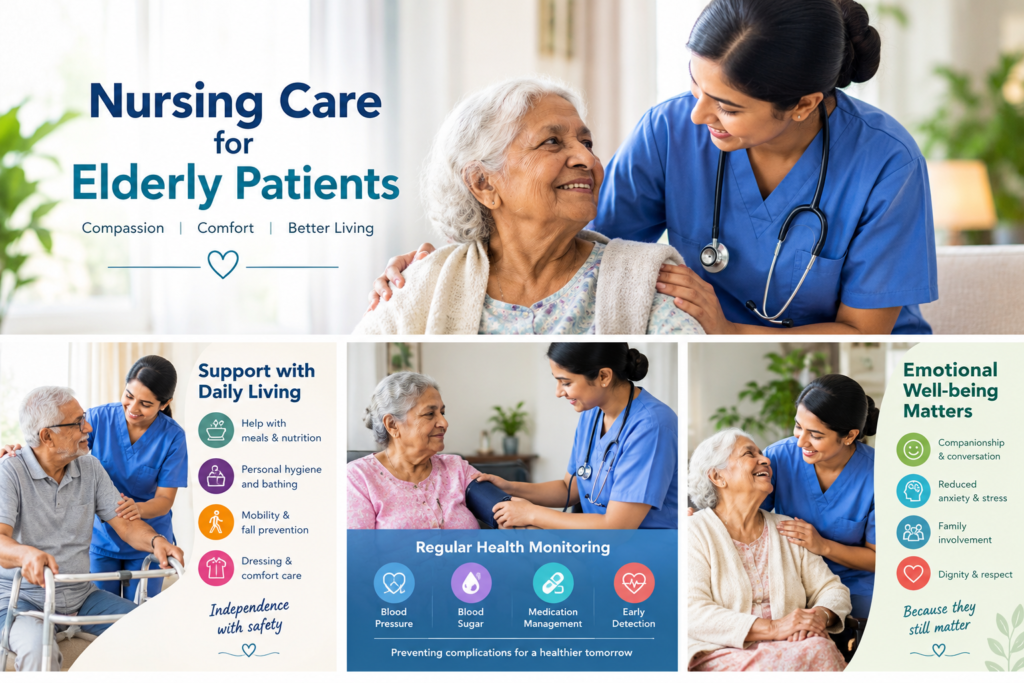
Nursing Care for Elderly Patients
Elderly patients often need additional support to maintain their health, comfort, independence, and quality of life. Nurses play an important role in providing compassionate care, monitoring health conditions, preventing falls, and supporting families as they care for older adults.
1. Monitoring Health and Vital Signs
Nurses monitor blood pressure, pulse, temperature, breathing, and other health indicators as required. Regular observation helps identify changes in a patient’s condition and supports timely medical attention.
2. Supporting Daily Activities
Some older adults may need assistance with bathing, dressing, eating, and moving safely. Nurses provide respectful support while encouraging patients to maintain as much independence as possible.
3. Preventing Falls and Injuries
Falls can cause serious injuries in older adults. Nurses help reduce risks by checking the patient’s surroundings, encouraging the use of appropriate mobility aids, and supporting safe movement.
4. Promoting Nutrition and Hydration
Balanced nutrition and adequate hydration are important for healthy ageing. Nurses help patients follow recommended dietary plans and observe difficulties with eating, swallowing, or drinking that may require professional assessment.
5. Managing Long-Term Health Conditions
Older adults may live with conditions such as diabetes, hypertension, arthritis, or heart disease. Nurses support ongoing care by monitoring symptoms, reinforcing prescribed treatment instructions, and communicating concerns to healthcare professionals.
6. Providing Emotional and Social Support
Ageing can sometimes bring loneliness, anxiety, or emotional challenges. Nurses listen to patients, encourage meaningful interaction, and treat every individual with dignity, patience, and compassion.
7. Educating Families and Caregivers
Family members often play a major role in elderly care. Nurses explain safe caregiving practices, medication instructions, hygiene, nutrition, and warning signs that need medical attention.
Conclusion
Nursing care for elderly patients goes beyond treating illness. It includes protecting dignity, promoting independence, preventing complications, and providing emotional support. Through practical training and compassionate patient care, nursing students can develop the skills needed to support older adults in hospitals, care homes, and community settings.
Frequently Asked Questions (FAQ)
1. What is elderly nursing care?
Elderly nursing care involves supporting the health, safety, comfort, and daily needs of older adults.
2. Why is nursing care important for elderly patients?
It helps monitor health conditions, prevent injuries, support daily activities, and identify changes that may require medical attention.
3. How can nurses help prevent falls in older adults?
Nurses can assess fall risks, encourage safe movement, check environmental hazards, and support the appropriate use of mobility aids.
4. What skills are important in elderly care nursing?
Patience, communication, observation, safe patient handling, empathy, and knowledge of age-related health needs are important skills.
5. Where can elderly care nurses work?
Depending on their qualifications and experience, they may work in hospitals, rehabilitation centres, residential care facilities, community healthcare services, or home healthcare.