
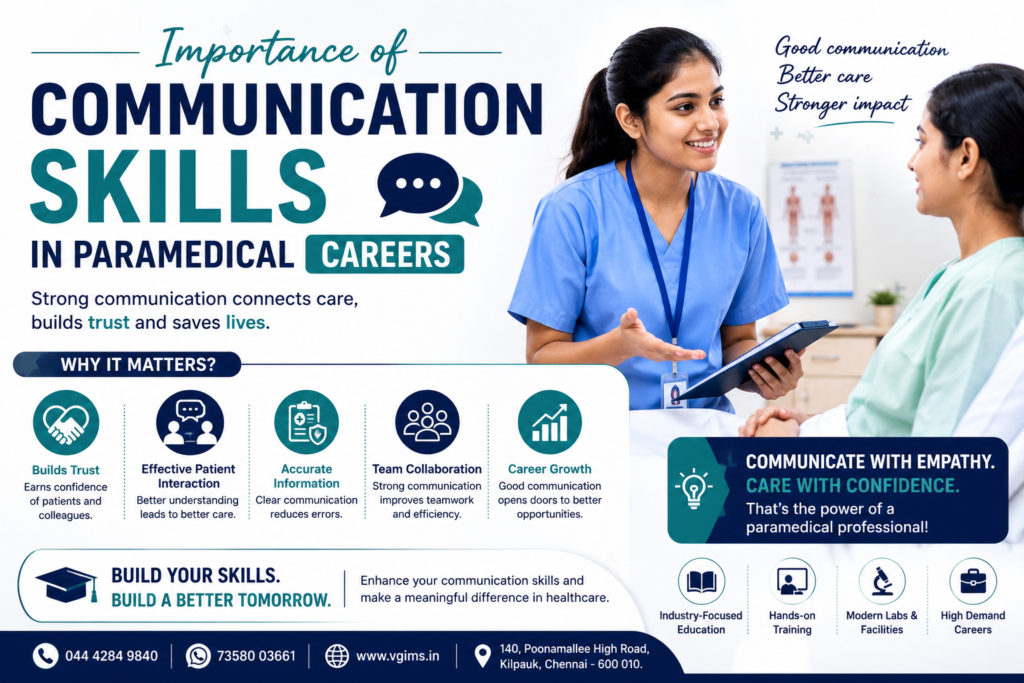
Communication Skills in Paramedical Careers
Communication is one of the most important skills in the healthcare industry. While technical knowledge helps paramedical professionals perform medical procedures accurately, effective communication ensures patients receive the right care with confidence and comfort. Whether working in a laboratory, operation theatre, emergency ward, or patient care unit, paramedical professionals interact with doctors, nurses, patients, and their families every day. Good communication reduces misunderstandings, improves teamwork, and creates a positive healthcare environment.
As healthcare continues to evolve, employers increasingly value candidates who possess both clinical expertise and strong interpersonal skills.
Why Communication Skills Matter in Paramedical Careers
1. Builds Patient Trust
Patients often feel anxious when visiting hospitals or diagnostic centers. A healthcare professional who communicates calmly, listens carefully, and explains procedures clearly helps patients feel comfortable and confident throughout their treatment.
2. Improves Teamwork
Healthcare is a team effort. Doctors, nurses, laboratory technicians, pharmacists, and healthcare assistants work together to provide quality patient care. Clear communication between team members reduces errors, improves coordination, and ensures timely treatment.
3. Reduces Medical Errors
Miscommunication can lead to incorrect patient information, delayed diagnosis, or treatment mistakes. Accurate communication regarding patient history, laboratory results, medication, and procedures plays a vital role in maintaining patient safety.
4. Enhances Professionalism
Healthcare professionals with strong communication skills demonstrate confidence, empathy, and responsibility. These qualities leave a positive impression on patients, colleagues, and employers, helping build a successful and respected career.
5. Supports Career Growth
Communication skills are valuable not only during patient care but also during interviews, presentations, workplace meetings, and leadership roles. Professionals who communicate effectively often have better opportunities for promotions and career advancement.
How VGIMS Develops Communication Skills
At Vasuganesan Institute of Medical Sciences (VGIMS), students receive more than just technical training. The institute focuses on developing communication and professional skills that prepare students for real healthcare environments.
VGIMS encourages students to participate in:
- Classroom presentations and interactive discussions
- Practical demonstrations and patient interaction sessions
- Clinical training that promotes professional communication
- Workshops and seminars conducted by experienced healthcare professionals
- Team-based learning activities that improve collaboration and confidence
Along with hands-on practical training, students are guided on how to communicate respectfully with patients, work efficiently with healthcare teams, and maintain professionalism in hospitals and diagnostic centers. This balanced approach helps students become competent healthcare professionals who are technically skilled and confident communicators.
Build a Successful Healthcare Career with VGIMS
Technical knowledge alone is not enough to succeed in today’s healthcare industry. Employers seek professionals who can perform procedures accurately while communicating effectively with patients and colleagues. By developing both clinical expertise and communication skills, students become better prepared for rewarding careers in hospitals, laboratories, clinics, and healthcare organizations.
If you are looking for a paramedical institute that focuses on practical learning, personality development, and industry-ready skills, VGIMS provides the right environment to build a successful healthcare career.
Frequently Asked Questions (FAQs)
1. Why are communication skills important in paramedical careers?
Communication skills help paramedical professionals interact effectively with patients, doctors, nurses, and colleagues, ensuring safe, accurate, and compassionate healthcare delivery.
2. How do communication skills improve patient care?
Good communication helps patients understand medical procedures, reduces anxiety, builds trust, and ensures accurate sharing of important health information.
3. Does VGIMS provide communication skills training?
Yes. Along with technical education, VGIMS conducts presentations, seminars, practical sessions, clinical exposure, and interactive activities to improve students’ communication and professional skills.
4. Which healthcare professionals need communication skills?
Medical laboratory technicians, operation theatre assistants, ECG technicians, dental care assistants, general duty assistants, and all healthcare professionals benefit from strong communication skills.
5. Can communication skills improve job opportunities?
Absolutely. Employers prefer candidates who combine technical expertise with effective communication, teamwork, professionalism, and patient-handling abilities, making them more employable in the healthcare sector.