
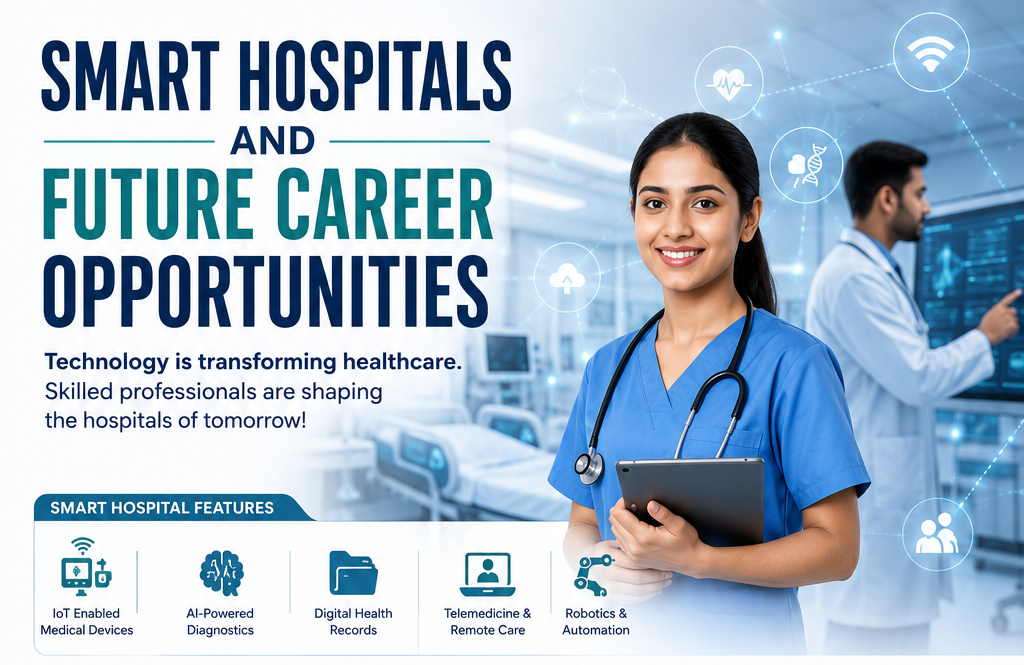
Smart Hospitals and Future Career Opportunities
The healthcare industry is rapidly embracing technology, and smart hospitals are becoming the future of patient care. These hospitals use advanced digital systems, modern medical equipment, artificial intelligence (AI), electronic medical records, and connected healthcare technologies to improve efficiency and deliver better treatment outcomes.
As healthcare evolves, the demand for skilled paramedical professionals who can work with modern technologies is also increasing. Students who receive quality education and practical clinical training today will be well-prepared for the healthcare careers of tomorrow.
At Vasuganesan Institute of Medical Sciences (VGIMS), Chennai, students gain industry-oriented diploma education with practical exposure, helping them build the knowledge and skills needed to work confidently in modern healthcare environments.
What Are Smart Hospitals?
Smart hospitals combine medical expertise with digital technology to improve patient care, hospital management, and clinical efficiency. They use advanced systems to monitor patients, manage medical records, support diagnosis, and streamline healthcare services.
Although technology plays an important role, trained healthcare professionals remain essential for operating equipment, assisting patients, and ensuring quality care.
Technology Transforming Healthcare
Today’s hospitals are adopting advanced technologies that improve patient safety and healthcare delivery.
Some common technologies include:
- Electronic Medical Records (EMR)
- AI-assisted healthcare systems
- Smart patient monitoring devices
- Digital ECG systems
- Advanced laboratory equipment
- Automated operation theatre management
- Telemedicine services
- Digital appointment and hospital management systems
Healthcare professionals who understand these technologies have a competitive advantage in the job market.
Future Skills Every Healthcare Professional Needs
The future healthcare workforce requires more than medical knowledge. Employers also value professionals who can adapt to new technologies and changing healthcare practices.
Students should focus on developing:
- Clinical knowledge
- Practical healthcare skills
- Medical equipment handling
- Digital healthcare awareness
- Communication skills
- Teamwork
- Critical thinking
- Professional ethics
- Adaptability
These skills prepare students for careers in modern hospitals and healthcare organizations.
Diploma Courses at VGIMS
VGIMS offers career-focused diploma programs that prepare students for today’s healthcare industry while equipping them for future technological advancements.
Students can choose from:
- Diploma in Hospital Nursing & Midwifery (DHNM)
- Diploma in General Nursing & Midwifery (DGNM)
- Diploma in Medical Laboratory Technology (DMLT)
- Diploma in Dental Care Assistant (DCA)
- Diploma in Electrocardiogram Technology (DECG)
- Diploma in Operation Theatre Assistant (DOTA)
Each program combines classroom learning with laboratory sessions and clinical training, helping students develop practical skills and professional confidence.
Career Opportunities in Smart Hospitals
As healthcare facilities adopt advanced technologies, trained paramedical professionals can explore careers in various departments.
Career opportunities include:
- Multi-specialty Hospitals
- Smart Hospitals
- Diagnostic Laboratories
- Cardiology Departments
- Dental Clinics
- Operation Theatres
- Emergency Care Units
- Community Health Centres
- Healthcare Technology Services
Graduates with practical experience and technical knowledge will continue to be in high demand.
Why Choose VGIMS?
Preparing for the future starts with choosing the right educational institution. Vasuganesan Institute of Medical Sciences (VGIMS), Chennai, focuses on practical learning that prepares students for modern healthcare careers.
Students receive hands-on clinical exposure, laboratory practice, and guidance from experienced faculty members. The institute emphasizes technical competence, communication, teamwork, professionalism, and patient-centred care while introducing students to modern healthcare equipment and clinical practices.
Whether students enroll in DHNM, DGNM, DMLT, DCA, DECG, or DOTA, they gain the practical knowledge and confidence required to succeed in today’s technology-driven healthcare industry.
Conclusion
Smart hospitals are transforming the healthcare industry by combining advanced technology with quality patient care. While digital innovations continue to improve healthcare services, skilled paramedical professionals remain at the heart of every successful healthcare system.
Students who choose industry-focused diploma programs, develop practical skills, and stay updated with healthcare advancements will enjoy excellent career opportunities in the future. At VGIMS Chennai, students receive the education, practical training, and clinical experience needed to build rewarding careers in the next generation of healthcare.
FAQs
1. What is a smart hospital?
A smart hospital uses advanced technologies such as AI, electronic medical records, smart medical devices, and digital healthcare systems to improve patient care and hospital operations.
2. Which skills are important for future healthcare careers?
Students should develop clinical skills, digital healthcare knowledge, communication, teamwork, medical equipment handling, adaptability, and professional ethics.
3. Which diploma courses does VGIMS offer?
VGIMS offers Diploma in Hospital Nursing & Midwifery (DHNM), Diploma in General Nursing & Midwifery (DGNM), Diploma in Medical Laboratory Technology (DMLT), Diploma in Dental Care Assistant (DCA), Diploma in Electrocardiogram Technology (DECG), and Diploma in Operation Theatre Assistant (DOTA).
4. What career opportunities are available in smart hospitals?
Graduates can work in hospitals, diagnostic laboratories, cardiology departments, operation theatres, dental clinics, emergency care units, and other technology-enabled healthcare facilities.
5. Why should students choose VGIMS?
VGIMS provides experienced faculty, practical clinical training, modern laboratory facilities, and career-oriented diploma programs that prepare students for the future of healthcare.